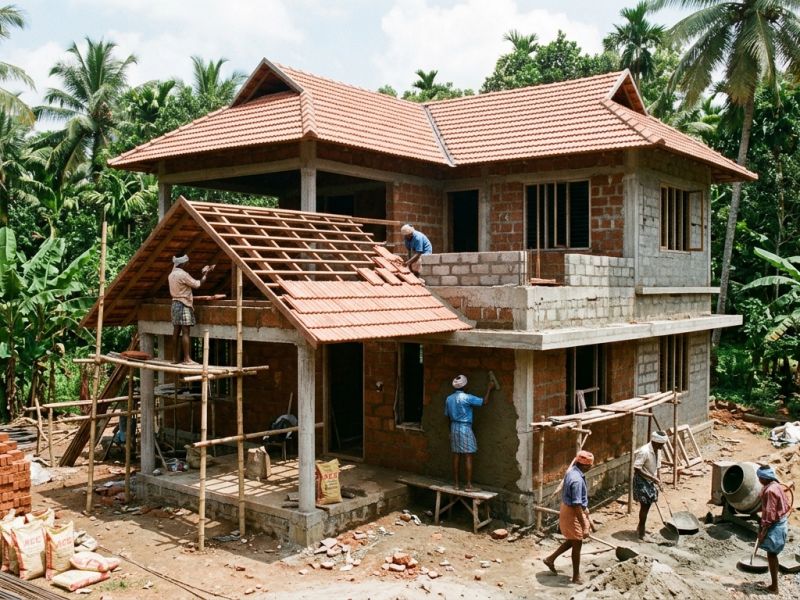

Why Climate Resilience Matters for Property Buyers
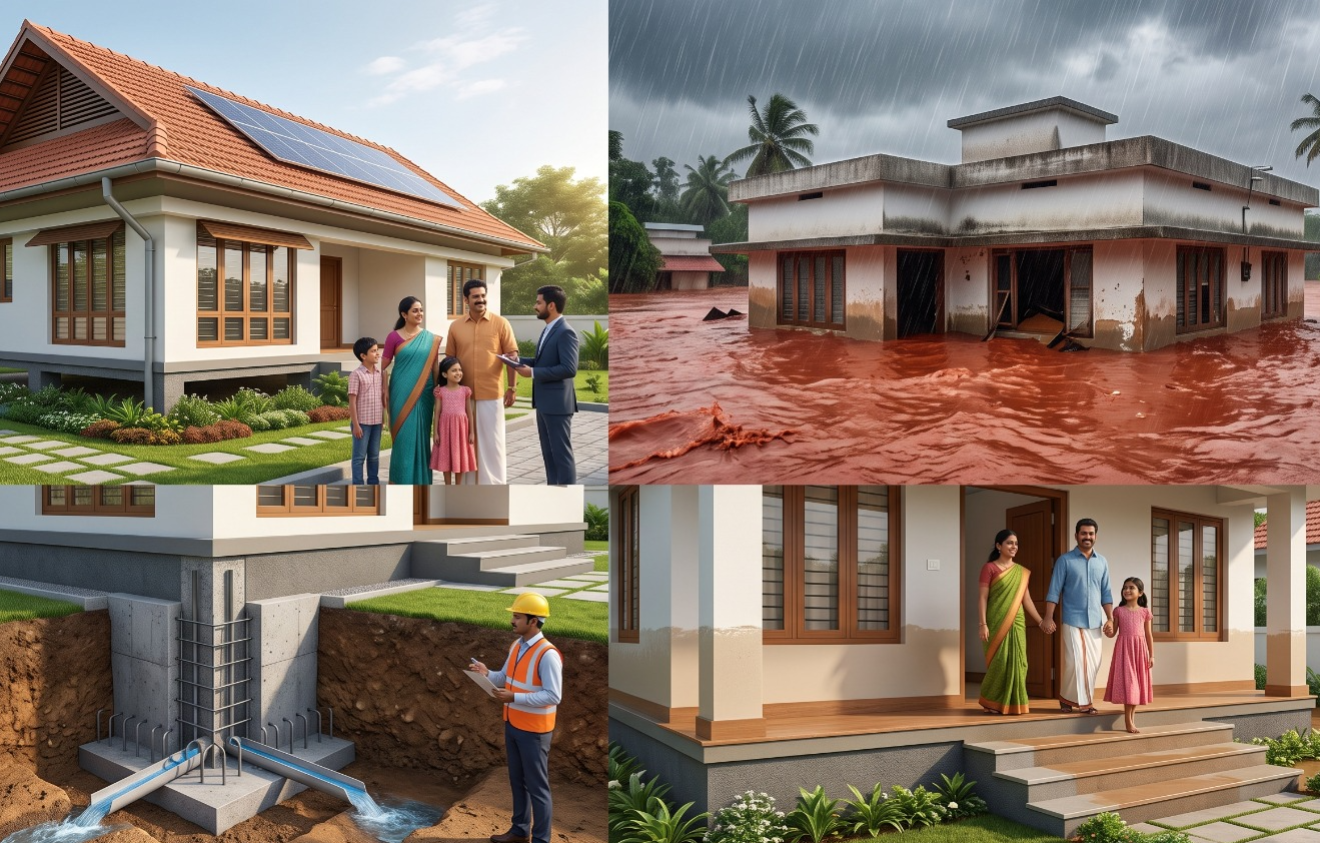
Why Climate Resilience Matters for Property Buyers
Kerala’s
relationship with water has always been complex. Its rivers, backwaters,
reservoirs and abundant monsoon rainfall are part of what makes the state
attractive, but they can also create significant risks for communities and
properties.
Recent
discussions around Kerala’s flood-management capabilities highlight an
important issue for the real-estate sector: property decisions can no longer
be based only on location, price and connectivity. Flood resilience must also
become part of the equation.
A recent
Times of India report points to the need for more precise flood forecasts that
can tell authorities not simply that heavy rain is expected, but how river
levels may change, which areas could be inundated and when critical thresholds
might be reached.
For
homebuyers and property investors, this raises an equally important question: How
prepared is the property you are considering for Kerala's changing climate?
From Rainfall Forecasts to Property-Level Risk
Knowing
that heavy rainfall is expected does not necessarily tell a homeowner what will
happen to a particular neighbourhood.
Flood
risk can depend on several interconnected factors, including:
- The property's elevation
- Proximity to rivers, canals
and drainage channels
- Local topography
- Storm-water drainage
capacity
- Groundwater and soil
conditions
- Previous flooding patterns
- Reservoir and dam operations
- The accessibility of roads
during extreme rainfall
Kerala's
geography makes this particularly important. Rivers originating in the Western
Ghats can respond quickly to intense rainfall before flowing towards the
Arabian Sea. This means that rainfall in one part of a river basin can
potentially affect communities much farther downstream.
For
real-estate buyers, therefore, the question should not simply be "Does
this area flood?" It should be "What are the specific flood
risks associated with this property and its surrounding infrastructure?"
Why Flood Resilience Could Become a Real-Estate
Differentiator
Climate
resilience is gradually becoming an important consideration in property
development around the world. Kerala could see a similar shift.
A
development designed with resilience in mind may incorporate features such as:
- Elevated building entrances
and critical electrical systems
- Effective rainwater and
storm-water management
- Adequate site drainage
- Flood-resistant landscaping
- Emergency access routes
- Backup power and water
systems
- Proper maintenance of
drainage infrastructure
- Greater consideration of the
site's natural water flow
These
features may not always be as visible as a clubhouse, swimming pool or
landscaped entrance, but they can have a significant impact on long-term
liveability.
For
developers, this creates an opportunity to move beyond conventional
construction and position resilience as part of the value proposition.
What Homebuyers Should Check Before Buying
Before
purchasing a house, apartment, villa or plot in a flood-prone region, buyers
should carry out additional due diligence.
1. Investigate the property's history
Speak to
residents, neighbours and local businesses about previous flooding. A
property's marketing brochure may not reveal how the surrounding neighbourhood
behaved during an extreme monsoon.
2. Look beyond the individual property
A
building may be well constructed, but access roads, nearby drainage channels or
low-lying areas can still create problems.
Consider
the entire neighbourhood rather than evaluating the building in isolation.
3. Examine the elevation and drainage
Ask how
rainwater leaves the property during intense rainfall. Check whether water
naturally accumulates around the site and whether the development has adequate
drainage capacity.
4. Understand nearby water infrastructure
Properties
located near rivers, reservoirs, canals or other water bodies deserve
additional scrutiny. Reservoir management and downstream river conditions can
influence flood risk across an entire basin.
5. Ask developers specific questions
Instead
of asking only about amenities and specifications, prospective buyers can ask:
What
flood-risk assessment was carried out for this project?
What
drainage measures have been incorporated?
Where are
electrical systems and generators located?
What
happens to access roads during extreme rainfall?
Has the
site experienced waterlogging or flooding in the past?
These
questions can help buyers distinguish between a property that merely looks
attractive and one designed for long-term resilience.
Technology Could Change How We Evaluate Property
Risk
One of
the most significant ideas highlighted in the report is the potential for
integrated flood forecasting.
Such
systems can combine information from weather forecasts, satellites, radar,
river gauges, reservoir data, land-use information and hydrological models to
provide more localised predictions. The objective is to understand not just
where heavy rain may occur, but how that rainfall could translate into river
levels and flooding at specific locations.
For the
real-estate industry, better data could eventually influence everything from land
acquisition and project planning to insurance, lending and property valuation.
Imagine a
future property-search platform where buyers can see not only the price and built-up
area of a home, but also its flood-risk profile, historical waterlogging
information, elevation and accessibility during extreme weather.
That kind
of transparency could fundamentally change property buying in Kerala.
A New Definition of a "Good Location"
For
decades, the phrase location, location, location has dominated real
estate.
Connectivity
to schools, hospitals, employment centres and transport hubs remains extremely
important. But climate resilience may become another component of location quality.
A
desirable property in the future may be one that offers:
Good
connectivity + strong infrastructure + environmental resilience + reliable
access.
This does
not mean buyers should avoid every property near a river or low-lying area.
Water bodies are an important part of Kerala's landscape and can add
considerable lifestyle value.
Instead,
the emphasis should be on understanding and managing risk intelligently.
What This Means for Kerala's Developers
The
real-estate industry can play an important role in creating more resilient
communities.
Developers
can incorporate flood-risk analysis into site selection, master planning and
infrastructure design rather than treating disaster management as an
afterthought.
Projects
can also be planned around the wider catchment and drainage system instead of
looking only at the individual development site.
This
approach aligns with the broader message of Kerala's evolving
disaster-management strategy: the goal should increasingly be to anticipate
risk and reduce damage before a disaster occurs, rather than relying
primarily on rescue and rehabilitation afterward.
Resilience Is an Investment, Not Just an Expense
For
property buyers, flood resilience may initially appear to be an additional
consideration. In reality, it can be viewed as part of protecting the long-term
value of an investment.
A home is
not simply a physical structure. Its value is also connected to:
- Neighbourhood accessibility
- Infrastructure reliability
- Safety
- Maintenance costs
- Insurance considerations
- Future buyer demand
- Overall liveability
As
extreme weather becomes an increasingly important consideration in urban
planning, properties that demonstrate stronger resilience could potentially
become more attractive to future buyers.
The Future of Kerala Real Estate
Kerala's
real-estate market is entering an era in which environmental risk deserves the
same attention as traditional property fundamentals.
Better
flood forecasting can help governments prepare communities. Better planning can
help developers build more resilient projects. And better information can help
buyers make more informed decisions.
For
anyone purchasing property in Kerala, the lesson is simple:
Don't ask
only whether a property is well located today. Ask whether it will remain
liveable, accessible and resilient in the future.
The next
generation of Kerala real estate will not be defined solely by luxury,
connectivity or architecture. Increasingly, it may also be defined by how
intelligently a property is designed to coexist with the state's climate and
landscape.
In a
state where water is both an asset and a risk, flood resilience could become
one of the most valuable features a property can offer.